


 Dead battery
 Car stuck in mud, snow or a ditch
 How to jump start a car
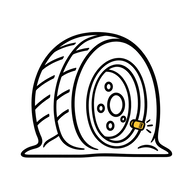 Tire repair and replacement
Why the isthmus matters
The city's trademark is "Lake, City, Lake." Downtown and the Capitol Square sit on a strip of land between Lake Mendota and Lake Monona, and Lake Wingra lies within city limits to the southwest. Madison is about 77 miles west of Milwaukee and 122 miles northwest of Chicago. Only a few streets cross the isthmus, so when one stops moving the whole downtown feels it.
A car that dies in a lane on one of those streets blocks buses, bikes and deliveries. Switch on hazards, stay belted in and wait for a light-duty truck rather than walking in traffic.
Snow, cold and the winter starts
The airport's 1991 to 2020 averages show about 52 inches of snow a year, with most of it falling from December through February. Winters are often well below freezing, and the seasonal swing is large. Many of the calls a wrecker or roadside crew gets in that stretch start the same way: a car that turned over fine yesterday just clicks. The page on cold-weather no-starts walks through the causes, and a new battery is the usual fix.
Winter also means plowing, and plows push snow against curbs and parked cars. State law lets municipalities adopt snow emergency regulations that take effect once signs are posted at the municipal limits, so check the signs and the city's website before you park on the street overnight. Cars left in the way of a plow are a common reason a vehicle ends up in a tow-away lot.
If a wheel is buried or the car is stuck against a drift, a winch-out may be needed. Do not rev an engine for long against a stuck wheel, because the transmission overheats.
Campus traffic and game days
The University of Wisconsin-Madison is the flagship campus of the state system, and State Street links campus to Capitol Square. Camp Randall Stadium was built on the site of a Civil War training camp in 1917, and football Saturdays put tens of thousands of cars into the neighborhoods around it. A car with a weak alternator that stalls with the lights, heater and phone charger on is a typical game day story.
At semester starts and ends, students drive long distances with packed cars. Tires matter most. Use the guide to tire pressure before a long haul with a heavy load, and look at the spare. If you do get a flat, the page on a flat tire covers your next steps.
Leaving town
Most drivers heading east take I-94 toward Milwaukee. A car that starts to overheat or lose power should be pulled off as soon as it is safe, rather than driven on to the next town. The guide on overheating lists what to do and what to avoid.
Updated November 25, 2026




