


 Car overheating
 Car stalling while driving
Start with the cheap suspects
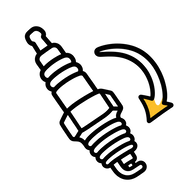
Most engine complaints are not a dead engine. A rough idle, a stumble or a jerk under load often starts with spark plugs, ignition coils, a sensor or a vacuum leak. RepairPal puts spark plug replacement at $288 to $399 nationally (page dated September 3, 2026, taxes and fees excluded), with labor of $184 to $270 and parts of $104 to $129, and notes the price swings with the number of plugs and how hard they are to reach. Read what causes a misfire or rough idle before assuming the worst.
A shop will begin by reading codes, checking oil level and pressure, and listening to the engine. You can do the first steps yourself with an OBD-II reader and a dipstick check.
Warning signs and what they usually mean
| What you notice | Common meaning |
|---|---|
| Sharp metallic pinging when accelerating | Detonation, often from low-octane fuel, hot intake air or timing trouble |
| Deep, rhythmic knock that rises with speed | Worn bearings or internal damage. Stop driving |
| Ticking at startup that fades | Low oil or lifter noise, check the oil level first |
| Shaking at idle | Misfire, vacuum leak or worn engine mounts |
| Milky oil or white exhaust smoke with sweet smell | Coolant entering the engine, often a head gasket |
| Blue smoke | Oil burning, which points to rings, seals or valve guides |
| Oil on the driveway | Leaking gasket or seal. See oil leak causes |
Knock, or detonation, happens when part of the fuel and air mix ignites outside the normal flame front, and that moderate knock wears surfaces while severe knock can melt holes through pistons. Modern knock sensors let the computer retard the timing, which is why a car may feel flat before it ever pings loudly.
Costs by job
A complete engine replacement is priced car by car, so ask whether a quote covers a new, rebuilt or used engine. Here are RepairPal ranges for the common engine jobs, all from 2026 and without tax or fees:
| Job | RepairPal estimate | What drives it |
|---|---|---|
| Spark plug replacement | $288 to $399 | Number of plugs, access, diagnosis time |
| Engine mount replacement | $643 to $798 | Labor of $328 to $481, since mounts are buried |
| Head gasket replacement | $2,572 to $3,386 | Labor of $1,669 to $2,449, several days of work |
The head gasket number is mostly labor. RepairPal says a mechanic must remove many under-hood components, take the engine apart to clean the surfaces, install a new gasket and reassemble everything, which typically takes several days. Related parts that look worn are often replaced at the same time, so expect the final bill to grow.
Head gasket trouble in plain words
The head gasket seals the joint between the engine block and cylinder head. When it fails, coolant, oil or combustion gas can cross where they should not. Signs include coolant disappearing with no puddle, bubbles in the coolant reservoir, white smoke, oil that looks like chocolate milk, and overheating. Coolant in the cylinders brings silicon that can ruin the catalytic converter too.
Do not drive a car that is overheating or has milky oil. Warped heads and bent parts make the repair far larger. The cooling system is often at fault first, so a proper pressure test comes before a gasket job.
Repair, rebuild or replace
A remanufactured engine is a used engine rebuilt to something close to factory specifications. The block is cleaned and checked for cracks, and wear parts such as rings, bearings, gaskets and valvetrain parts are replaced. Higher-quality rebuilds also hone the cylinders and fit oversize bearings and rings. A used engine from a salvage yard is cheaper but its history is unknown, so ask for mileage, a written warranty and what happens if it fails.
- Repair when the damage is one component, the engine has good compression and oil pressure, and the rest of the car is solid.
- Rebuild or remanufactured when the engine is worn but the block is sound and the car is worth keeping.
- Used swap when the budget is tight and the warranty is clear.
- Walk away when the repair bill passes what the car is worth and other big jobs, such as the transmission, are also due.
Matching engine codes and production years matters for a swap, because a close match can still have different sensors or wiring.
Questions to ask before an engine job
- What test proved this part failed, and can you show me the reading or the part?
- Is there a cheaper cause you ruled out, such as ignition or a sensor?
- Does the quote cover the thermostat, belts and fluids that are usually done at the same time, and the timing belt if the job exposes it?
- How long is the warranty on the labor and the parts, and is there a mileage limit?
- Can you give me a written estimate and call me before any added work?
When it needs a tow instead
Tow it for a rod-knock sound, a red oil pressure light, steam, a gauge in the red, or smoke that keeps getting thicker. Driving a mile on a failing engine can cost thousands. A light-duty tow or flatbed avoids stressing the drivetrain, and the advice on staying safe through a highway breakdown helps while you wait. Small jobs such as plugs on an easy engine can be done by a mobile mechanic at your curb.
Updated November 25, 2026





