
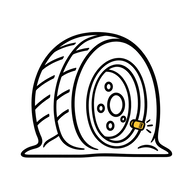

 How to change a flat tire
Signs a tire needs attention
- A slow leak that needs air every week or two. The tire may be repairable. Start with our guide to a flat tire.
- A bulge or bubble on the sidewall, which means internal damage and calls for replacement.
- Tread worn to the wear bars, the raised strips across the grooves. US law has required them on new tires since 1968, and tires are usually taken out of service at about 1.6 millimeters, or 2/32 inch, of remaining tread.
- Cracks in the rubber, which can come from age and sun.
- The TPMS warning light. Federal rules require it on light vehicles sold after September 1, 2007, and it must alert you when one or more tires are 25 percent or more below the recommended pressure.
- Vibration or pulling. These can come from the tire, but they also come from alignment or suspension. See a shaking steering wheel and a car that pulls to one side.
Repair or replace
Rules differ a little by shop and tire maker, but a few points are widely accepted. A puncture in the central tread area is the part a shop can plug and patch from the inside. A puncture near the shoulder or in the sidewall cannot be safely repaired, because that area flexes constantly. A tire that was driven while flat may have internal damage even if the hole is small. Ask the shop to dismount it and look inside before patching.
A plug pushed in from outside without removing the tire is a temporary fix at best. A proper repair involves taking the tire off the wheel.
If the tread is down to the wear bars, replacement is the only answer, no matter how new the rest of the tire looks.
What it costs
RepairPal's Fair Price Estimator gives a national average of $138 to $166 for a tire replacement in 2026. It lists labor at $61 to $90 and parts at about $77. Tax, fees and regional pricing are extra. Larger and specialty tires cost more, so ask for an out-the-door price for the whole set, not the per-tire sticker.
| What drives the price up | Why |
|---|---|
| Size and speed rating | Larger wheels and performance ratings cost more per tire. |
| Run-flat or all-terrain types | These are specialty constructions with a higher part cost. |
| TPMS sensors | A sensor that fails or gets damaged during mounting adds a part and labor. |
| Mounting and balancing | Some shops include these, others charge by the wheel. |
| Disposal fee | Often added per tire. |
How old is too old
Rubber ages even when the tread looks good. The process is thermo-oxidative degradation, driven by heat, oxygen, flexing and sunlight. The date is molded into the sidewall as part of the DOT code, and the code also lets you check for recalls. The Rubber Manufacturers Association in the UK recommends not putting unused tires into service after six years and replacing all tires ten years after manufacture. That is a British recommendation. Your car or tire maker's manual may set its own limit, so read it.
The Uniform Tire Quality Grading system is an NHTSA label that rates tread wear, traction and temperature resistance so you can compare tires on the sidewall.
What a shop does
- Finds the right size on your door jamb placard and compares it with the tire's sidewall.
- Removes the wheel, dismounts the tire and inspects the inside for damage.
- Repairs a qualifying puncture from the inside, or fits a new tire on the rim.
- Balances the wheel on a machine so it spins without wobble.
- Sets the pressure to the number on the placard, not the number molded on the tire, and checks the TPMS light.
- Tightens the lug nuts to the specified torque and tells you to recheck them after a short drive.
If the car pulled to one side before the tire change, ask whether it needs a wheel alignment.
Pressure, mileage and tire life
Proper inflation is the cheapest tire care there is. FuelEconomy.gov says correct pressure raises mileage by about 0.6 percent on average, and that each 1 psi drop in the average of all four tires costs about 0.2 percent. Learn the routine in our tire pressure how-to. Uneven wear on the edges or the center usually points to a pressure habit or a suspension fault. Worn parts like those in suspension and steering repair chew up new tires too.
Doing it yourself and where to stop
Changing a flat to the spare is a skill worth having. Follow our flat change steps on level, firm ground, and read about spare tire limits before you drive on one. No one should lie under a car that only a jack holds up. Stop and call for help if the ground is soft or sloped, if the lug nuts will not budge, if you are on a busy shoulder, or if the wheel is damaged. Roadside flat tire help exists for those moments.
When it needs a tow
If the tire has shredded, the rim is bent, or you have no usable spare, a tow is safer than driving. A flatbed avoids putting any load on a damaged wheel.
Updated November 25, 2026




