


 Dead battery
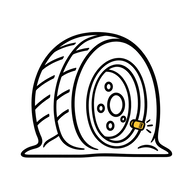 Flat tire
 Flatbed towing
Two interstates and a ring of highways
I-25 enters from Colorado, runs along the western edge of the city and meets I-80 southwest of town. I-180 is a short bypass that runs with US 85 from I-80 to US 30, and WYO 212 forms a beltway around the city. US 30, the old Lincoln Highway, plus US 85 and US 87 also serve the city.
The junction is where long hauls to Denver, Salt Lake City and Nebraska mix with local traffic, so a breakdown on a ramp or the interstate itself has fast traffic moving beside it. Stop as far right as you can, switch on hazards and read the guide to a highway breakdown before leaving the car. A heavy-duty wrecker is the right call for a loaded truck.
I-80 toward Laramie
West of the city I-80 climbs. Exit 362 at Cheyenne and exit 310 at Laramie are about 52 miles apart, and the route crosses Sherman Summit, the highest point on I-80. West of Laramie the 77 miles between Laramie and Rawlins close often in winter. Check the WYDOT road report at wyoroad.info before leaving, and see the state page for what that site covers.
If a closure strands you in town, a car that idles for hours burns fuel and can drain a weak battery. Keep a charged phone and a quarter tank, and if you do run low, having fuel brought out saves you a tow bill.
Wind and chinooks
Cheyenne has a cold semiarid climate. Chinook winds blowing down from the Rockies can bring warm spells in the middle of winter, then the cold comes back. Rapid thaws and refreezes make black ice on bridges and ramps. Cheyenne gets about 60 inches of snow a season, heaviest in March and April, though thick snow cover rarely lasts. Spring storms catch drivers who put away their winter gear too early.
Cold snaps drain batteries, so learn why a car refuses to start on a freezing morning and how to jump start a car correctly. If snow packs around your wheels, see the guide to getting unstuck and keep a shovel in the trunk.
Summer storms and a notable tornado
Annual precipitation is about 15.9 inches, concentrated from May to August, and July averages 69.4 degrees. Thunderstorms can drop hail, and a cracked windshield or dented hood becomes a job for a collision shop or an auto glass repair. On July 16, 1979, an F3 tornado struck Cheyenne, killing one person and injuring 40, the most destructive tornado in Wyoming history. Storm days are a reason to keep an emergency kit and to keep the steps for a minor accident handy.
Frontier Days and a railroad city
Cheyenne Frontier Days, held since 1897 for 10 days around the last full week in July, is described as the largest outdoor rodeo and western festival in the world. Crowds park on lawns and in business lots, and cars removed from private property are a regular outcome. The tow-away page explains how those removals usually work, and the Wyoming page lists how police tow calls are dispatched.
The Union Pacific and BNSF both have railyards here, and the Union Pacific steam program is based in the city. A car that dies on a crossing is a different kind of emergency from a normal stall. Everybody should be out and well clear of the tracks before anyone thinks about a truck.
F.E. Warren and a long-distance town
F.E. Warren Air Force Base began as Fort D. A. Russell in 1867 and is one of the oldest continuously active installations in the country. A car headed out on a long-distance move should get a tire and fluid check before the first mile. Drivers heading north on I-25 can read about Casper, the next stop for big towns on that road.
Updated November 25, 2026




