


 What to do after a breakdown on the highway
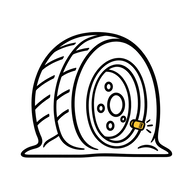 Flat tire
 Heavy-duty towing
 Battery jump start
The freeways, one by one
I-75 in Detroit is two freeways in one. The Fisher Freeway covers the southern and central part, crossing the River Rouge on a bridge about 8,367 feet long and 115 feet high, and the Chrysler Freeway runs north past Wayne State and Hamtramck. A curve near 9 Mile Road on the Chrysler stretch has been called the worst freeway spot for accidents in Metro Detroit. I-75 also reaches the Ambassador Bridge.
I-94, the Edsel Ford Freeway, crosses the east side. The 1953 Ford-Lodge interchange where it meets M-10 was the first full freeway-to-freeway interchange in the country. In 2015 about 168,200 vehicles a day used I-94 between I-75 and Chene Street. I-96, the Jeffries Freeway, runs through Livonia, where the count between 6 and 7 Mile Roads was about 201,200 a day in 2011, the highest on the route. Near Novi, I-96 meets I-275, I-696 and M-5 in a complex junction. Read how to handle a highway breakdown before you need it.
Safety Service Patrol, and what changed
MDOT calls its patrol the Safety Service Patrol or Freeway Courtesy Patrol. The program started on Detroit's stretch of I-75 in 1994, and crews are sent out when law enforcement or MDOT requests them. In 2018, the company then running the Detroit-area vans stopped service on freeways in Wayne, Oakland and Macomb counties after a contract dispute with MDOT, and another company was due to take over. MDOT's overview of its Detroit traffic center now describes the patrol as covering more than 300 miles of Metro Detroit freeways around the clock, though schedules can change during special projects. Motorists can't request a crew.
Border crossings and truck traffic
Detroit and Windsor form the second-busiest international crossing in North America. The Ambassador Bridge and the Detroit-Windsor Tunnel carry much of it. Trucks heading to the bridge use I-75 and I-96, so a flat or an overheated engine on a ramp can block a lane full of freight. Tows for heavy trucks and mid-size truck towing use different equipment than a car tow, so say what you're driving when you ask for help. A box truck or a van is not a car.
Cold, potholes and the auto town
Detroit is the center of the U.S. auto industry, and General Motors, Ford and Stellantis North America all have headquarters in Metro Detroit. The city's population was 639,111 in 2020, down from a peak of 1.85 million in 1950. A lot of drivers here keep older cars running, so batteries, brakes and tires come up often. A flat tire after a pothole is the most common winter surprise, and a shaking steering wheel often points to a bent wheel or a tire out of balance. Tire service and suspension work are busiest after the thaw.
Winter calls are about dead batteries and jump starts. If the car turns over but won't catch, see why a car won't start.
When your car is towed in Detroit
Detroit police track every car they tow from hook-up to recovery or auction, and FindMyTowedCar.org shows where yours is and what it costs to get it back. Michigan's rules still apply. Within a day, police are required to log an impounded car in Michigan's law enforcement database, and the tow company notifies police if nobody claims it in 7 days. After a crash, police must release the car before the tow company can. Details are in the rules section of the Michigan page. If you arrive before the hook-up, you may be able to drive away after paying a reasonable fee.
Next door
Ann Arbor, west along I-94, has a very different pace, and its page is here.
Updated November 25, 2026



