


 Car won't start in the cold
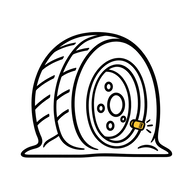 Flat tire
 What to do after a breakdown on the highway
 How to check brake pads
Where the highways meet
I-15 runs along Ogden's western edge, and I-84 comes in from the east through the southern suburbs, joining I-15 near Riverdale. From Riverdale to Tremonton the two routes share the same pavement. North of Ogden, I-15 narrows to two lanes in each direction at the 2700 North interchange in Farr West. A crash or stalled car at that squeeze backs traffic up quickly.
The express lanes add a wrinkle. Tolling on the Davis and Weber County segment began on October 31, 2022. If a vehicle breaks down on this stretch, treat it as a highway breakdown, keep seat belts on and wait for help away from the traffic side.
US-89 runs through town as Washington Boulevard, the main street. Stop-and-go driving on a main street is where fender benders happen. For photos, information swaps and deciding on a body shop visit, see the steps after a fender bender. If a car cannot be driven afterward, collision repair usually starts with a tow.
Up Ogden Canyon
State Route 39 starts as 12th Street, becomes a curved two-lane road beside the Ogden River and climbs into Ogden Canyon, an official scenic byway. It reaches Pineview Reservoir and Huntsville. There are few places to pull off, so a stall can block the whole lane. A car with a slipping gear or sputtering engine is better fixed in town than discovered on the first curve. A guide to a slipping transmission lists the signs.
East of Huntsville, SR-39 climbs toward Woodruff, and the portion from mile 37 to 55.5 is closed in winter. If your navigation app sends you that way in January, check UDOT Traffic first. SR-158 branches north across Pineview Dam and is another way into the valley.
Skiers drive these roads with equipment on the roof. Snowbasin, Powder Mountain and Nordic Valley are all in the mountains east of Ogden, and Snowbasin hosted alpine events in the 2002 Winter Olympics. Getting a car unstuck from snow is possible with a shovel and traction, but a deep drift on a slope calls for a winch.
Seasons on the bench
Ogden sits at 4,341 feet and gets about 16 inches of precipitation a year. Snow usually starts in late October or early November and continues through April. Summers run hot and dry, often near 95 degrees, then monsoon thunderstorms arrive from late July to mid-September. A sudden downpour on I-15 produces hydroplaning, and it exposes worn wipers and bald tires. The wiper blade guide takes ten minutes. If you are not sure the tread is deep enough, a shop doing tire work can measure it.
Cold arrives with the first hard freeze. When it does, a frozen-morning no-start is the call a tow driver hears most, and a jump often solves it.
A railroad town with a commuter line
Ogden grew as a railway hub, and Ogden Central Station now serves FrontRunner, which connects to Salt Lake City and Provo. Amtrak does not serve the city directly. Weber State University is in town too. Between the university, the rail line and the ski traffic, plenty of cars here sit for long stretches and then work hard on a mountain grade. Before a ski season, have the brakes looked at. See checking brake pads at home and the guide to brake service if a pedal feels soft.
If a tow company takes your car
Utah Code 72-9-603 applies in Ogden as everywhere else in the state. A company that hauls off a car you did not agree to move must enter it in a state database and inform the agency covering the pickup spot. If it was taken from an Ogden street, call that city's police non-emergency line. For a car from I-15 or I-84, ask the Utah Highway Patrol. Ask to see posted fees before you pay, and read the section on private lot tows if the lot lacked signs.
Nearby metro pages
Ogden is the northern anchor of the Wasatch Front. The next big city south is Salt Lake City, which has its own interchange troubles at the I-15 and I-80 junction. Farther south, Provo sits on Utah Lake.
Updated November 25, 2026





