


 Car overheating
 Dead battery
 Body and collision repair
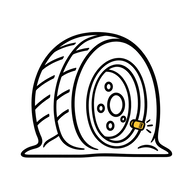 How to check tire pressure and TPMS warnings
Storms first
Fort Worth is prone to supercell thunderstorms that can drop large hail and spin up tornadoes. Average annual rainfall is about 34 inches, and May is the wettest month. A hail strike can crack glass and dimple panels, which sends cars to shops for glass replacement and body work. After a storm, check that headlights and taillights still work, because broken lenses are easy to miss in the dark.
Snow averages only about 2.6 inches in a year, but the all-time low was minus 8 degrees. A rare hard freeze can crack weak batteries and leave a car dead on a driveway. The page on why a battery dies overnight sorts out the signs.
Heat on the loop and the grid
August is the hottest month, with an average high of 96 degrees, and the record is 113 set in June 1980. Interstate 30 crosses the city east to west, Interstate 35W runs north to south and Interstate 820 circles the center. On hot afternoons every one of those roads is a place where an engine can overheat. Cars with a weak fan or low coolant fail first, so looking at the coolant level before a trip is worth the five minutes. If the gauge is already in the red, a coolant leak is the likeliest cause, and the next stop should be a shop, not a parking lot.
Freight and work trucks
Fort Worth is a logistics town. Rail yards and warehouses draw trucks of every size onto the roads around the airport and the north side. A disabled box truck needs a mid-size wrecker, while a tractor and trailer needs a heavy recovery unit. Drivers of pickup trucks with trailers should know that a dead truck on a trailer ramp is a different tow than a dead sedan.
Stockyards, downtown and event parking
The Stockyards and downtown draw visitors on weekends, and parking lots around them are patrolled for unauthorized cars. If you park somewhere that looks open, read the sign. Under Texas rules the sign must carry a tow truck silhouette and a phone number. The practical side of a private lot tow is covered in detail. If your car is gone, look for a sign, then check with the lot owner before you call police.
Everyday repairs
Local driving is hard on suspension. Potholes in older neighborhoods mean frequent visits for alignment and suspension work, and a car that drifts left or right on a flat road often needs a diagnosis for pulling. Drivers who commute across the metroplex also put on miles quickly, so a regular oil service is cheap protection. If a tire goes flat on the shoulder, a careful tire swap is possible when the shoulder is wide enough and the ground is level. If you are on a narrow shoulder, stay in the car with the belt on until help arrives.
A growing city on old roads
The 2020 census counted 918,915 residents, and a 2025 estimate puts the city above 1,028,000, which makes it the tenth most populous in the country. New neighborhoods have pushed commutes outward, so a driver can be 30 miles from a shop with little warning. Before a long commute, keep fuel above a quarter tank, because running dry on the shoulder is one of the simplest breakdowns to avoid and a surprisingly frequent one. If it does happen, a fuel drop gets you moving without a tow.
Warning lights after a storm
Flood water, hail and lightning surges can set off dash lights that did not appear before. A glowing amber lamp deserves a scan before it becomes a stall, and reading the stored codes with an inexpensive reader tells you if it is a loose gas cap or something worse. A flashing lamp is different. It means active misfire, and a flashing engine light should end your drive soon.
The other half of the metroplex
Dallas is the larger city next door, and the two share a hail pattern and freight flow. Drivers continuing south on I-35 can reach Austin, where the climate and terrain change quickly.
Updated November 25, 2026




